

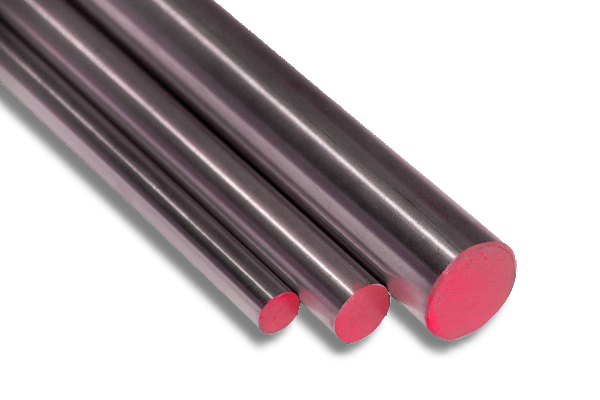


440C stainless steel bars may experience fracture under specific conditions. This material contains approximately 1.2% carbon and 17% chromium, and can achieve a hardness of 58-60HRC through heat treatment. When the hardness approaches the upper limit, the toughness of the material will significantly decrease. If the residual stress formed during the quenching process of the bar is not fully relieved by tempering, cracks are prone to occur during subsequent processing or use.
Improper cold processing techniques can exacerbate problems. If the cooling is not sufficient during deep hole machining, the thermal stress formed by local high temperature and rapid cooling will cause the material to become brittle. Non metallic inclusions in the rolling direction of the bar material may become the starting point of fracture when subjected to lateral force. The design of sudden cross-sectional changes can lead to stress concentration, gradually expanding into macroscopic cracks under dynamic loads.
The risk of fracture in corrosive environments is more complex. Chloride ion erosion can cause pitting on the surface of materials, which gradually develop into fatigue cracks under alternating loads. Martensitic stainless steel may experience temper brittleness after prolonged operation at around 300 ℃, and carbides precipitated at grain boundaries can significantly reduce material ductility.
Related Q&A
Q: How to avoid fracture of 440C rod after heat treatment?
Answer: Adopting a stepped heating and quenching process, with two insulation sessions at 300 ℃ and 600 ℃, can reduce thermal stress. It must be tempered at least three times, and after each tempering, it needs to be air-cooled to room temperature.
Q: How can the lifespan of 440C components be extended in corrosive environments?
Answer: Low temperature nitriding treatment on the surface can form a 20 μ m thick nitride layer. It is recommended to replenish the passivation film weekly in seawater environment, and using a composite passivation solution of nitric acid and dichromate is more effective.