

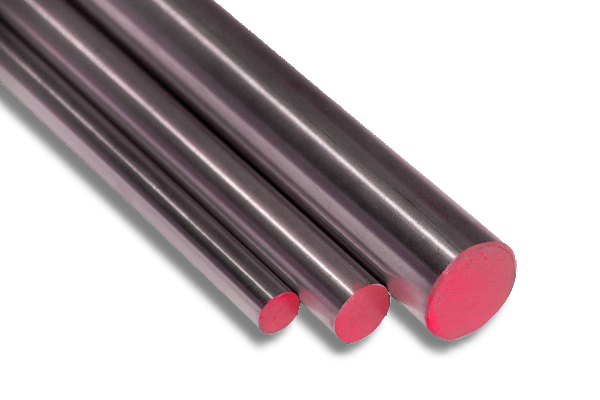


1.2316H mold steel has excellent corrosion resistance and is suitable for plastic mold manufacturing in high humidity environments. This material contains approximately 0.38% carbon, 16.0% chromium, and 1.0% molybdenum, effectively resisting the corrosion of acidic plastic decomposition products. High chromium content forms a dense oxide layer on the surface, significantly enhancing rust resistance.
The heat treatment process is crucial for the performance of 1.2316H. It is recommended to control the quenching temperature within the range of 1020-1060 ℃, and both oil cooling and air cooling can achieve the desired hardness. The tempering stage needs to be carried out twice at 480-580 ℃, with each holding time for two hours, and the final hardness can reach 30-34HRC. After this treatment, the mold has both good toughness and wear resistance.
The polishing performance is a prominent advantage of 1.2316H. The fine and uniform organizational structure and low sulfur content make the surface of the mold achieve a mirror effect. The machining deformation in the pre hardened state is extremely small, making it particularly suitable for precision mold manufacturing. Using fine graphite electrodes during electrical discharge machining can achieve better surface quality.
In injection mold applications, this material exhibits excellent thermal stability. Continuously working at 200-300 ℃ to maintain dimensional stability, effectively extending the service life of the mold. For the molding production of corrosive plastics such as PVC and ABS, their comprehensive performance is significantly better than that of ordinary mold steel.
Related Q&A
Q: Can 1.2316H mold steel be used for hot work mold manufacturing?
Answer: This steel grade is mainly designed for corrosion-resistant plastic molds. Although it has a certain thermal strength, long-term operation above 300 ℃ will cause a decrease in hardness, and it is not recommended for hot work mold scenarios with high heat loads.
Q: How to correctly perform welding repair on S1.2316H?
Answer: Preheat to 300-350 ℃ before welding, and use matching welding rods for layered welding. Each weld joint needs to be thoroughly cleaned, and stress relief annealing should be carried out immediately after welding. The temperature setting should be 10-15 ℃ lower than the original tempering temperature.